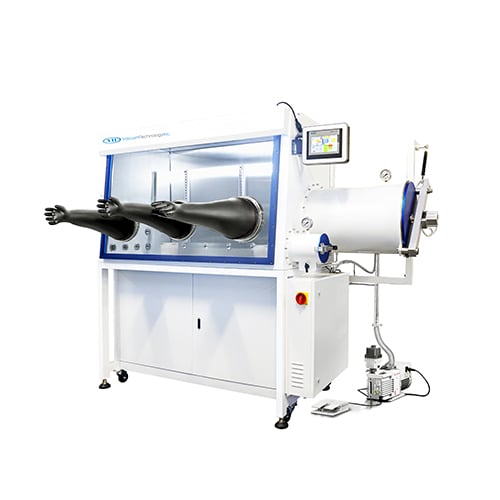
In modern laboratories and industrial production, high-purity inert gas gloveboxes are widely used in cutting-edge fields such as lithium-ion battery R&D, semiconductor material processing, and nuclear energy applications. As the primary interface between the operator and the internal environment, the gloves are often the most vulnerable components, susceptible to mechanical wear and chemical degradation. Improper maintenance can lead to micro-leaks, allowing external moisture and oxygen to infiltrate the chamber; this not only compromises the experimental environment but also accelerates the depletion of the copper catalyst and molecular sieves within the purification column. So, how should these gloves be maintained on a daily basis?
Promptly remove any residue from the glove surfaces after each use. Avoid using corrosive solvents such as acetone or strong acids; instead, gently wipe both the interior and exterior surfaces with a lint-free cloth dampened with a neutral detergent, then dry with a clean, dry cloth. Pay special attention to the areas between the fingers and the folds of the cuffs, as these spots tend to accumulate trace amounts of moisture or particulate matter, which can accelerate rubber degradation over time.
1. Visual Inspection: Under adequate lighting, inflate the glove until slightly distended and inspect for fine cracks, bubbles, or areas of localized thinning. Pay particular attention to frequently flexed joint areas and the vicinity of the cuff seal.
2. Airtightness Verification: Seal the glove cuff, use the pressure controller to set the chamber pressure to +10 mbar, and record the time it takes for the pressure to naturally drop to 0. If the pressure drop rate exceeds 3 mbar/minute, a minor leak may be present.
1. Avoid excessive stress: Butyl rubber has limited puncture resistance; use a tray when transferring sharp tools and never drag them directly across the surface. A built-in stainless steel shelf may be used as a buffer platform.
2. Control pressure fluctuations: While the system automatically maintains a protection range of ±12 mbar, frequent rapid manual pressurization or depressurization accelerates rubber fatigue. It is recommended to use a foot switch for gradual adjustments, limiting pressure changes to no more than 5 mbar per step.
3. Prevent ozone-induced aging: Keep the glovebox away from corona discharge equipment. Shield the glove area from UV disinfection lamps or operate the lamps only when the system is powered down.
4. Rotate usage regularly: For dual-station or extended-length gloveboxes, swap the positions of the left and right gloves monthly to ensure even wear across stress points.
1. Mild Adhesion: If the inner surfaces stick together due to prolonged disuse, do not pull them apart forcefully. Instead, purge the glove with a dry inert gas for 5 minutes, then gently push from the inside of the cuff to separate the surfaces.
2. Emergency Repair of Minor Damage: For temporary repairs, a specialized butyl rubber patch and room-temperature curing adhesive may be used; however, replacing the glove with a new one is the more reliable option. Typically, the recommended replacement interval for butyl gloves is 12–18 months, or immediate replacement is required if visible hardening or tackiness is observed.
The gloves of a vacuum glovebox act as the "lips of the system," and their integrity directly determines the ultimate environmental specifications within the chamber. Through daily cleaning, weekly airtightness checks, and the cultivation of gentle handling habits, a compliant pair of butyl rubber gloves can safely remain in service for over two years.

 EN
EN



