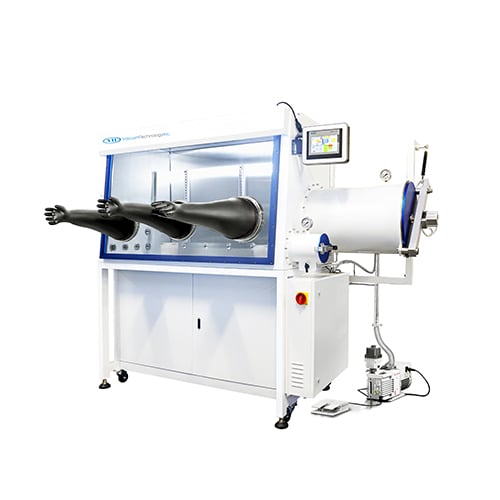
In the research and development and fabrication of solid-state batteries, the materials are extremely sensitive to moisture and oxygen, making ordinary air environments unsuitable for experimental requirements. The inert gas glove box, as the core equipment for creating an "ultra-pure, low-water-oxygen" environment, directly determines the success or failure of solid-state battery fabrication and the reproducibility of data based on its various technical parameters.
Many core materials in solid-state batteries are highly susceptible to hydrolysis with trace amounts of moisture, releasing highly toxic and flammable hydrogen sulfide gas; while lithium metal anodes are highly prone to surface passivation under the influence of oxygen, affecting ion transport.
Before performing core operations such as grinding, mixing, and pressing of the solid electrolyte, it is essential to ensure that the water and oxygen content within the glove box remains consistently stable at an extremely low level of <1ppm. Researchers should monitor the water and oxygen sensor readings within the glove box in real time. If any fluctuations occur, the exposure of sensitive materials should be immediately stopped.
The deterioration of the glove box's internal environment often stems from trace amounts of adsorbed water brought in by external materials. Whether it's glassware, stainless steel molds, or electrolyte raw materials, their surfaces will adsorb a layer of molecular-level water film when exposed to air.
When materials enter the glove box, they must undergo rigorous replacement in the transition chamber. For solid-state battery fabrication, it is strongly recommended to use a stainless steel vacuum transition chamber with heating capabilities. Simultaneously with vacuuming, high-temperature baking of molds, glass bottles, etc., can thoroughly remove stubborn moisture adsorbed on the surface. Before each opening of the transition chamber's internal door, it must be confirmed that the vacuum filling cycle has fully reached the standard; opening the chamber directly without a transition or with insufficient vacuum is strictly prohibited.
The glove box maintains a slight positive pressure relative to the outside to prevent external atmospheric infiltration. However, during manual operation of the gloves or movement of large internal equipment, the internal pressure can fluctuate drastically.
1. During solid-state battery fabrication, it is recommended to freely set the glove box's safe operating pressure range between +/-10 mbar and +/-15 mbar.
2. During operation, the foot switch should be used skillfully to manually adjust the pressure, avoiding sudden high pressure damage to the gloves caused by forceful hand insertion or sudden negative pressure leading to external air backflow caused by hand removal.
3. The PLC's automatic pressure protection function must be enabled. In the event of an unexpected pressure anomaly, the system should automatically shut off or replenish the pressure.
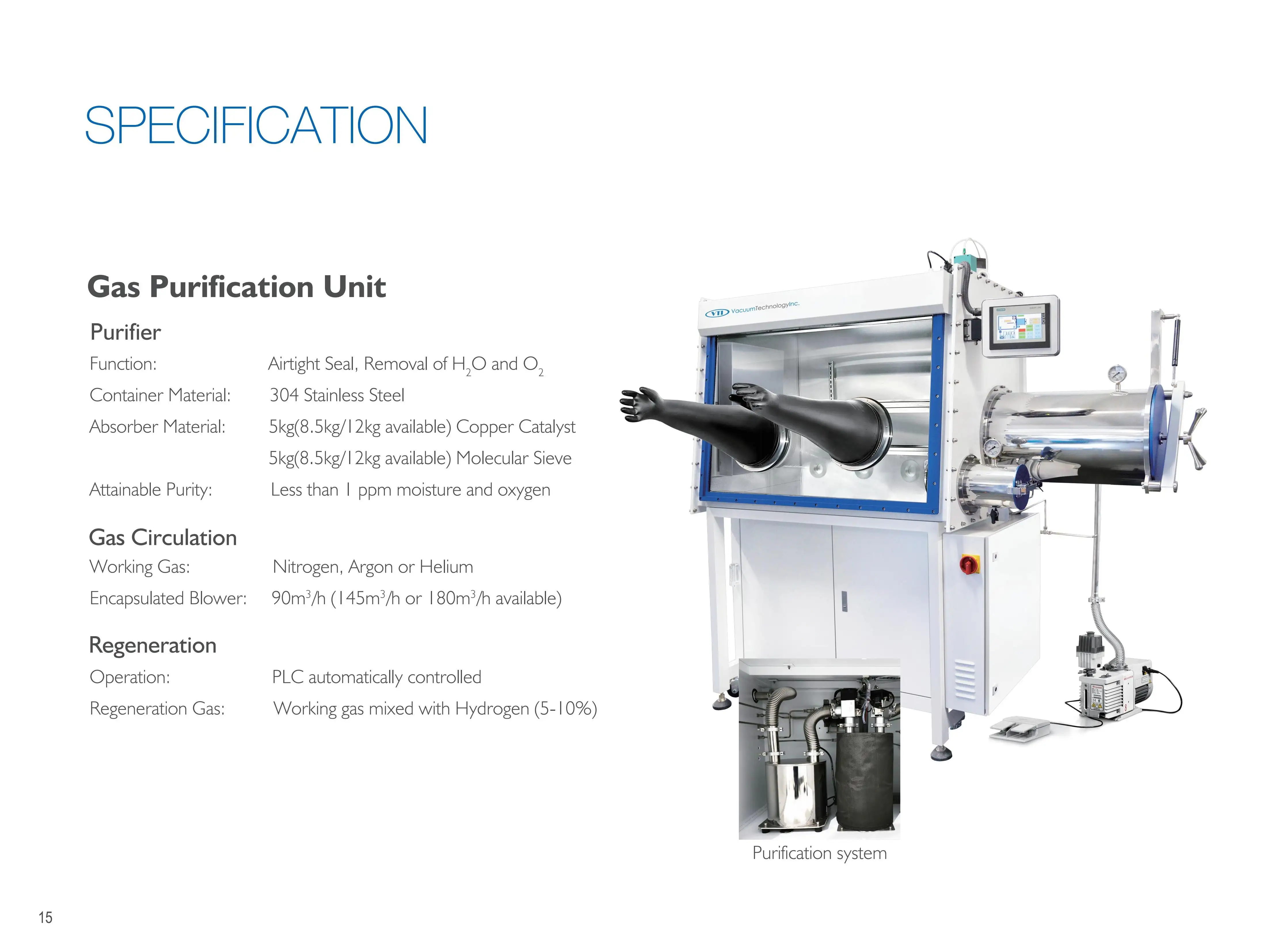
Some solid-state battery processes involve the use of organic solvents such as NMP, acetonitrile, and xylene for slurry preparation and drying.
Gaseous organic solvents, after entering the purification column through the circulation system, easily coat the surfaces of molecular sieves and copper catalysts, causing the purification materials to become "poisoned" and ineffective. Therefore, if the experiment involves solvent evaporation, a dedicated solvent purifier or activated carbon adsorption device must be installed before the circulation pipeline. During large-scale solvent evaporation operations, the main purification column circulation should be temporarily shut down, and the tank cleaning function should be used to remove the solvent vapor. The main purification circulation should only be restarted after evaporation is complete to extend the equipment's lifespan.
The fabrication of high-standard solid-state batteries is a rigorous test of "microscopic environment control." Understanding and mastering the core parameters of the glove box—from ensuring the vacuum tightness of the 304 stainless steel enclosure to precisely maintaining water and oxygen content, and controlling the heating transition chamber from the source—is crucial. Only by deeply integrating these equipment characteristics into every experimental step can the risk of material deterioration be truly avoided, and accurate and repeatable solid-state battery research results obtained.

 EN
EN



